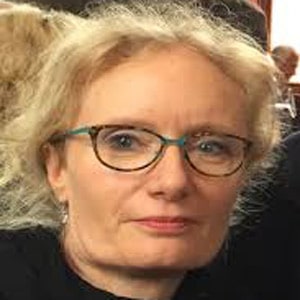
In June 2018, the Minister of Culture Françoise Nyssen entrusted Sophie Marinopoulos with the mission of gathering interesting field experiences around the cultural awakening of very young children. She was also to study the scientific research showing the full value of this awakening in the development of the toddler. The aim of this mission was to propose an action plan “so that culture is at the heart of support for the parent/child bond, in a spirit of prevention linked with the social, health, family, education and ecology sectors”.
On 4 June 2019, Sophie Marinopoulos submitted her report to the Ministry of Culture. What makes this report particularly striking to us, beyond the premise we share that culture is necessary for growing up, is that its first chapter looks at screens.
A psychologist and psychoanalyst specialising in childhood and family issues, and founder of the parent/child drop-in centres “Les Pâtes au Beurre”, Sophie Marinopoulos starts from the principle that, just as life is not defined only by good physical health, education is not defined only by care, protection and stimulation. She recommends cultural and artistic awakening as a way of reconnecting parents with their child to help them grow, not only physically but also psychologically. Indeed, this relationship around culture and art fosters a relationship of sharing emotions, language and meaning that will allow the baby to enrich their inner resources. Food alone is not enough to develop in a human society, cultural nourishment is needed too. Yet among the factors observed to encourage cultural malnutrition, the report points to screens.
Field observations and testimonies show children gaining access to screens ever earlier, even before their first birthday. This lowering of the age at which children are confronted with digital technology raises social but also legal questions, such as the right to one’s image among toddlers. Moreover, besides becoming a prime commercial target, children who spend time in front of a screen are deprived of that same time in relationship with their peers and their parents. The report points out in this regard that excess digital equipment sometimes masks under-investment in education.
Nevertheless, far from making parents feel guilty, Sophie Marinopoulos observes their bewilderment and their lack of reference points for managing digital use according to the age and needs of their children.
She therefore recommends the 3-6-9-12 milestones devised by Serge Tisseron to inform and raise their awareness. According to this report, this rule would be a major part of prevention around screens, to guard against abuse and misuse. Like the association “3-6-9-12, tame screens and grow”, the rapporteur reminds us that screens can also be media for education, exchange and creativity… provided that the child’s developmental stages are respected and that an adult accompanies them in a relational, emotional and linguistic exchange. Children must be well fed culturally and artistically, and digital technology, used sensibly and with support, can help.
The report identifies the frequent signs of cultural malnutrition: impoverished language, weak inner security, loss of self-esteem, reduced resistance to frustration, relational excitability, lack of reassuring experiences. So many problems that screens are crudely blamed for, when the main culprit is the absence of an educational relationship brought about by the pre-eminence of screens. This is what we must fight, without demonising (or idealising) digital technology as a whole. Here we find Serge Tisseron’s message, namely that “through reasoned prevention and wise education, it is possible to build a connected, responsible and creative society for our children and for ourselves”. Sophie Marinopoulos extends this message by campaigning for screens as supports for the cultural and artistic awakening of the youngest. Informed use of them could serve as an axis of prevention and parenting support.
https://www.culture.gouv.fr/content/download/196920/2104317/version/1/file/2018-06-11_Lettre%20de%20mission%20Marinopoulos.pdf
https://www.culture.gouv.fr/content/download/214595/2250125/version/1/file/RAPPORT%20Stratégie%20Santé%20Culturelle%20Sophie%20Marinopoulos.pdf
Thérèse Auzou-Caillemet is a doctoral student in education sciences.