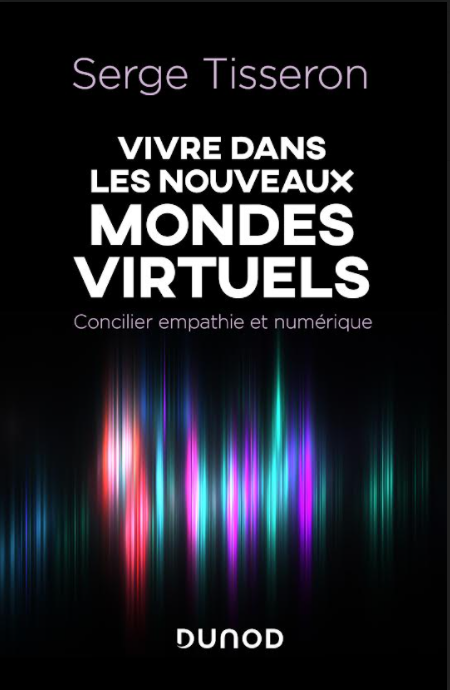
This book gathers some of the 200 posts that the author, Serge Tisseron, has published on his blog since 2005. Chosen by the publisher, these texts deal with the growing relationships between humans and digital technology, and each is commented on by the author in the light of the latest scientific research results.
One comment comes up often: learning how to use digital technology “should begin in nursery school and continue throughout life“. The author believes that “children’s self-regulation abilities are seriously threatened” by certain digital tools, “designed to destroy them at any age, so as to get everyone to stay on them ever longer and to bring more clicks, that is to say more personal data and more money“. Considering that a child who watches a lot of television runs the risk of becoming “an excessive consumer of all forms of screen“, he also thinks that the prevention of “excessive screens” in adolescence must begin “at birth“. But at the same time, he considers that the “excessive” monitoring practised by some parents “spoils their children’s lives and very often their future too“. As for taking a teenager’s mobile phone away, it is “like tearing away a part of themselves“, because “the phone opens up a space of communication and exchange for them“. Finally, the author reflects at length on so-called “virtual” reality, which is so much talked about today with the metaverse project, but many aspects of which are already present in online video games.
Another part of the book is devoted to the question of robotics: “The challenge of the 21st century will be to learn to interact with our digital tools as with a human being, without ever forgetting that they are only machines“, writes Tisseron. And he also recommends that these machines themselves remind us “constantly” that they are only machines. For “the essential problem that the development of robots will quickly pose to us is not that of their rights, but rather that of the rights of humans in the face of them“. Tisseron judges that both “artificial intelligence that passes itself off as human” and “toxic advertisements that claim to sell us robots with “emotions”” should be banned.
On the subject of “care robots”, he stresses that “for a patient, human contact is worth a thousand times that of a robot“. As for “talking machines”, capable not only of conversing with us but also of “simulating emotions”, Tisseron believes that the bond established between this type of machine and its user can “steer the attitudes and behaviour” of the latter, and “influence” their perceptions and memories. “As the voice of machines can be adapted to the expectations and fantasies of their users, it will become more and more difficult to resist them“, he worries. “The robots of tomorrow, he adds, will know how to listen to us, decipher our intonations and facial expressions, and understand our moods and even our mental states thanks to what they will know about us through the internet.” Let us therefore remain vigilant! Let us not allow any machine to nibble away at either our public freedoms or our inner freedom!