
1 player
Available on Xbox Series X|S and PC
At the origin of this game lies the feeling of isolation a developer felt during the COVID period. Seeing the first visuals, one might think of the image of a “lighthouse in the night” guiding the lonely towards a gathering. The metaphor goes much further than that. Or else it completely escaped them. Either way, this is a wonderful stroll, within everyone’s reach.
Keeper is thus built around the concept of solitude. There is no text, no dialogue and very few on-screen instructions. Exploration serves the narrative. In an ultra-colourful world, you play a lighthouse. Without our quite knowing why, it has suddenly become able to move. On the controller, the left stick is used to move and the right to aim the light that continuously shines from the top of the lighthouse. A bird is its travelling companion and is used to interact with certain elements of the scenery, for example an object to pick up or manipulate.
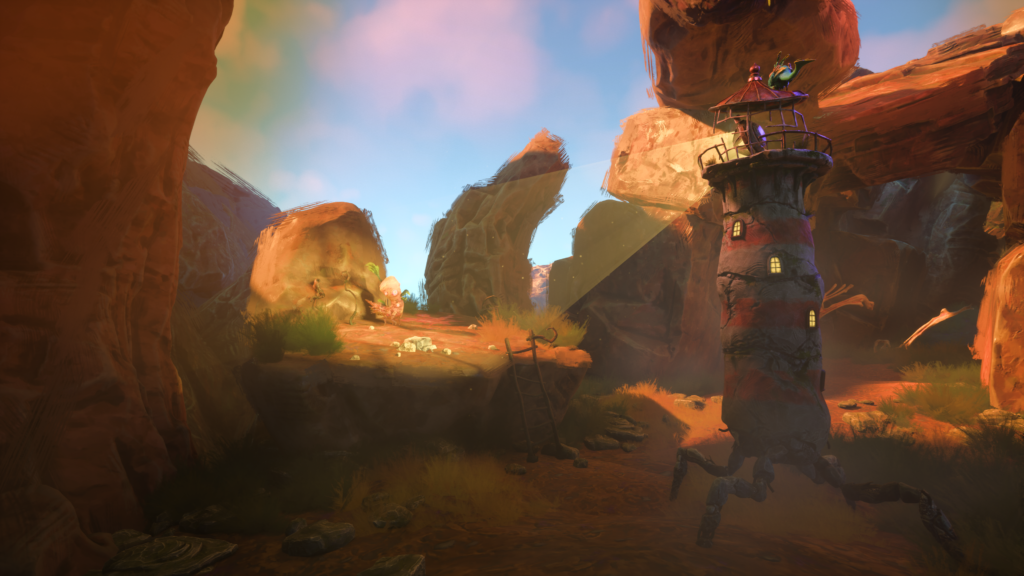
Light up the scenery and observe the results. Let yourself be amazed.
In Keeper, there are no enemies, no threats, you cannot lose or fall into a hole. You simply wander. The path is single and the few crossroads encountered are only there to offer views of the world, or puzzles to solve. The latter are never very difficult, without being monotonous for all that. They first call on the light, which has to be aimed at the right places. Gradually, other mechanics are added to diversify the experience. Notably a mid-game twist that I had not seen coming!
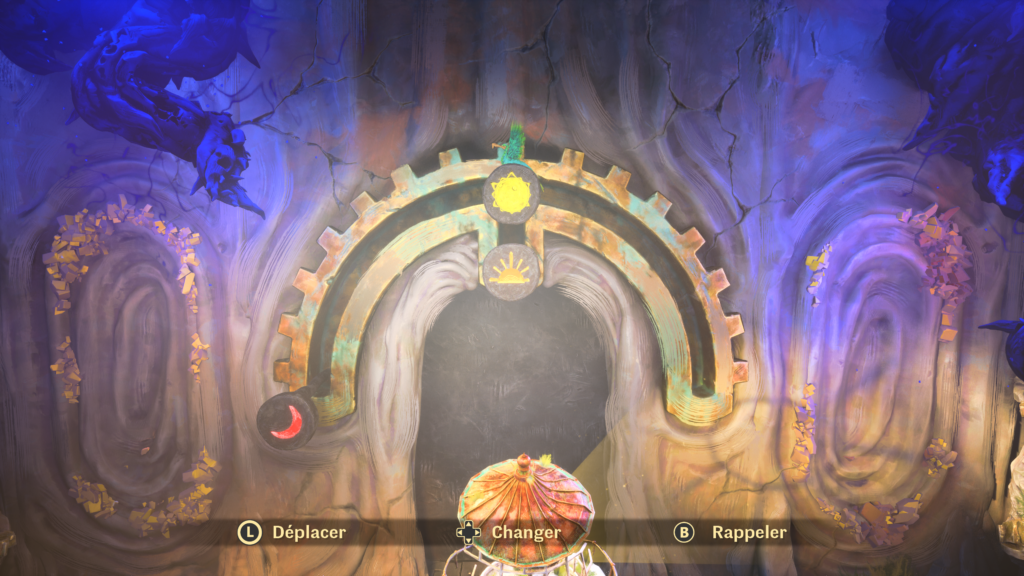
The kind of puzzle you come across.
This ease of access makes Keeper a very good game for relaxing, exploring without pressure and allowing yourself time to let your light wander over the scenery to see what it will trigger. Here, dazzling flowers and plants that start to grow. There, a hen interrupted in her meal who plays dead only to get back up as soon as you stop lighting her. The environments are teeming with detail.
These are also very good arguments for letting children get started with video games. A nice training ground before launching into more complex games. It is quite amazing, moreover, to have managed to convey emotions through an old limping building, crossing caverns towards a city, passing through forests and beaches. The world you explore seems straight out of a Tim Burton film.
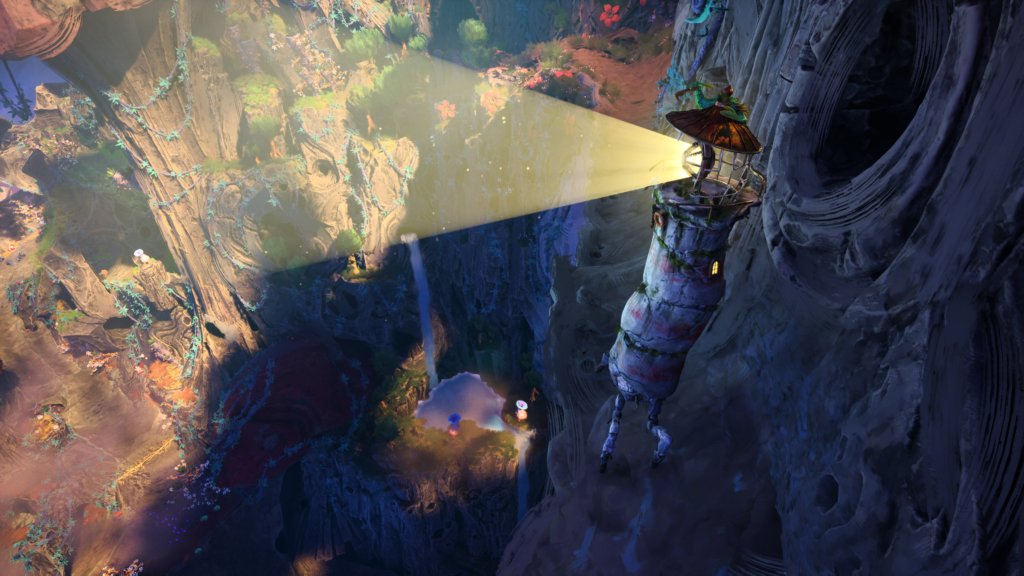
There are moments when you stop to take in the view.
As in an animated film, certain sequences may seem a little more impressive for the youngest (dark places, more worrying music, imposing creatures in the background without our interacting directly with them). This is then an opportunity to remember that these moments are also good for emotional and relational development! These passages make it possible to explain to children that feeling these emotions at that moment is normal and that it will not last, since there will be a resolution afterwards.
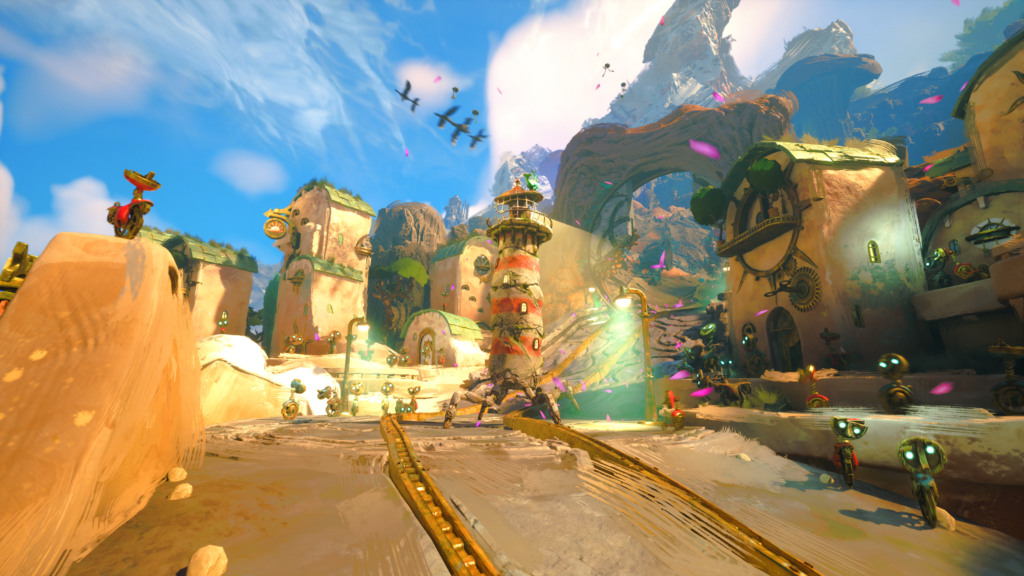
You also meet some funny inhabitants.
I very gladly recommend Keeper, whether you are handy with a controller or still learning, young or not so young. I really liked its wandering nature, which you can only truly understand by having the controls in your hands. Allow about five hours to finish it, which makes for a balanced experience.
I also find it particularly interesting to see that a worldwide event like COVID gives rise, five or six years later, to cultural productions that explicitly or implicitly incorporate what was felt. While video games do not influence reality, the constraints of reality, on the other hand, strongly influence the creation of games… Light has been shed!
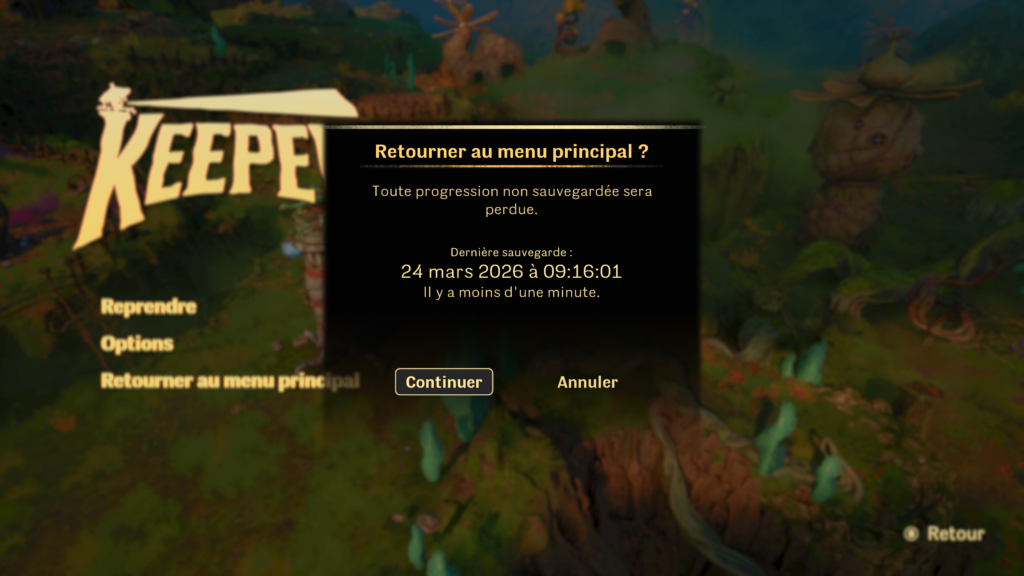
No need to worry about when to quit the game, we are told how much time has passed since the last automatic save.